


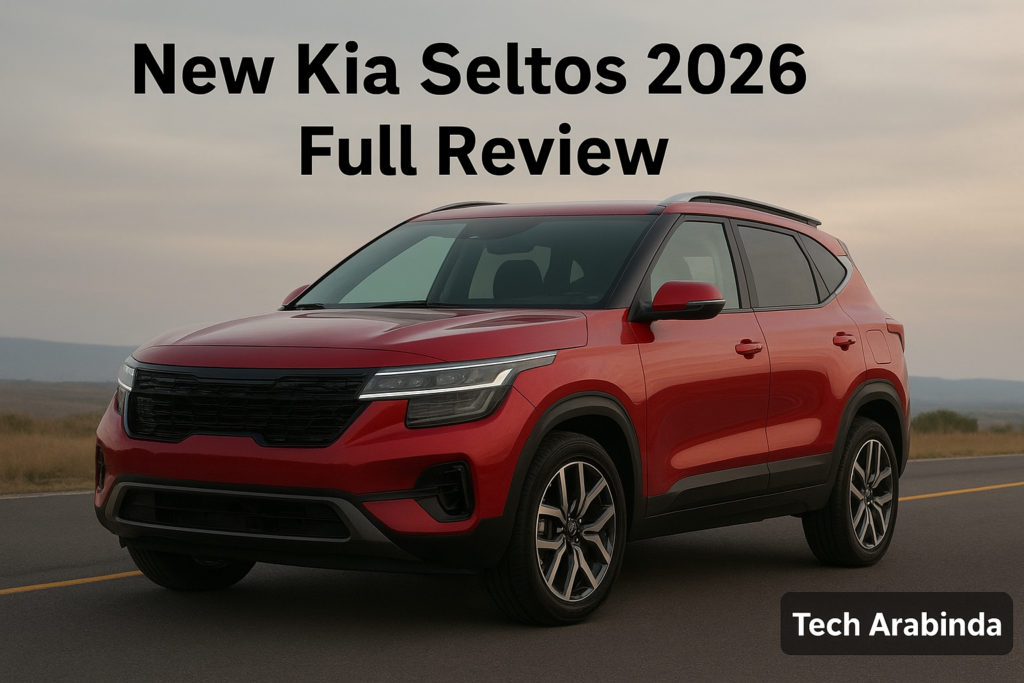
New Kia Seltos 2026: Bigger, Bolder and Built for Modern India

Introduction
Kia’s latest compact SUV arrives confidently: larger, more premium and packed with tech that shifts the game in the mid-SUV segment. For buyers who want a family car with presence, practicality and contemporary connectivity, this model stakes a strong claim.
A clear design statement — sharper, boxier, more mature
Kia Seltos moved away from the softer lines of the outgoing generation and gave the replacement a more assertive silhouette. The front end features a redesigned light signature and a sculpted grille that reads premium at a glance. Proportions have shifted in favor of length and a broader stance, giving the vehicle a road presence usually reserved for larger SUVs. Design cues such as modern LED projection headlamps and flush door handles underscore the brand’s intent to position this car a notch up in refinement.
Size and practicality — more room where it matters
One of the headline updates is the increase in exterior dimensions, most notably wheelbase and overall length. This translates into genuine improvements in rear-seat legroom and trunk capacity small things that matter for families and long drives. The wider track helps stability and also allows for bigger wheels without compromising ride comfort. If you routinely carry passengers or luggage, the extra real estate is an immediately noticeable upgrade.
Interior: tech-heavy, comfortable and thoughtful
Step inside and the cabin reads like a modern living room turned cockpit. The dashboard flows into a large, integrated display layout with options for a panoramic multi-screen setup. Kia’s attention to material quality is evident: soft-touch panels, layered trims and fitment that feels more premium than before. Feature highlights include ventilated and memory seats for the front occupants, a dual-pane panoramic sunroof, and a Bose eight-speaker audio system on higher trims amenities that elevate long journeys. Practical touches such as a 60:40 reclining second row and multiple USB-C points make the car family friendly.
Powertrains and driving character
Kia offers a sensible engine line-up tuned for both economy and punch. For urban buyers there’s a naturally aspirated petrol that prioritizes smoothness and fuel efficiency; for those who like brisk overtakes there’s a turbocharged gasoline unit providing stronger midrange power. A diesel option completes the package for buyers seeking torque for high-load usage or long highway hauls. Transmission choices include manual and automatic boxes, and higher trims are expected to get paddle shifters and driving mode selections to tailor throttle and gearbox behavior. Independent reviewers note the turbo petrol’s livelier character, while the diesel remains the choice for towing and heavy use.
Safety and ADAS — a big leap forward
Safety is a major focus: the latest suite offers Level-2 driver assistance in higher variants, incorporating features like forward collision avoidance, lane-keep assist, adaptive cruise and a 360-degree surround-view camera. Multiple airbags, reinforced body structure and modern electronic aids such as electronic stability control and hill descent/assist add confidence on varied roads. For safety-conscious families, the expanded ADAS set is a key differentiator versus older competitors.
Connectivity and ownership tech
Connectivity isn’t an afterthought. Expect wireless Android Auto and Apple CarPlay, over-the-air (OTA) software updates for vehicle controllers, remote vehicle health checks and geofencing alerts via the manufacturer’s connected-car app. These conveniences make maintenance and daily ownership simpler and keep the car feeling up-to-date for longer. Kia has also focused on practical ownership features such as remote alerts, location tracking and service notifications.
Trim levels, customisation packs and feature choices
Kia’s strategy this time includes clearly tiered trims and optional packs so buyers can tailor the car to their needs. Expect base trims that keep the price competitive with core features intact, mid trims adding creature comforts like ventilated seats and larger displays, and top trims offering full ADAS, premium audio and design-oriented packages. This modular approach allows customers to select a practical daily driver or a fully loaded executive family car without compromises.
Pricing, bookings and launch timeline
Kia Seltos announced that bookings would open in early December and that official prices will be revealed in early January 2026. Market estimates place starting prices in the competitive mid-SUV band, with educated guesses ranging from roughly ₹11–13 lakh for entry variants and stretching higher for fully loaded versions though final, on-road costs will vary by state and options. If you’re weighing value, the brand’s feature-rich top trims could represent strong overall value compared to rivals once official pricing is out.
How it compares to rivals
In the Indian context the car competes with a packed field: models such as the Hyundai Creta, Tata Sierra, Honda Elevate and a string of international rivals offer alternatives. Where this Kia Seltos stands out is its combination of size, technology and a premium feature list at an expected mainstream price point. Rivals may still be competitive on driving dynamics or pricing in base trims but in the mid and higher segments, the new offering aims to be a segment leader for tech and cabin comfort.
Fuel economy and running costs
Exact fuel economy figures will depend on the specific engine and transmission combination. Historically, Kia Seltos has tuned its compact SUVs to balance real-world efficiency with performance meaning urban mileage should be competitive while highway cruising remains efficient with the diesel option. Ownership costs will also be influenced by warranty and service packages; Kia’s connected services and OTA update strategy should reduce some service visits by smart diagnostics. Buyers should check official fuel economy figures when the company publishes the certified test numbers.
Who should buy it And Who should skip it?
Buy it if:
- You want a family SUV with modern cabin technology and a premium feel.
- Connectivity, ADAS and ventilation/memory seats are high on your priority list.
- You favour a bigger car for passenger comfort and luggage space.
Skip it if:
- You prioritise the absolute lowest purchase price above features (some rivals may undercut entry-trim pricing).
- You want the sportiest driving experience — there are rival options with sharper dynamics.
- An electrified powertrain is a must for you (a plug-in or EV variant hasn’t been announced for this model).
Final verdict — a compelling package with modern sensibilities
Kia’s new mid-SUV blends the practical needs of Indian buyers with the premium aspirations of urban families. Greater cabin space, improved safety tech and higher levels of comfort across trims make it more than a mere cosmetic update it’s an evolution designed to win buyer hearts and showroom visits. Pricing and long-term ownership costs will ultimately decide market performance, but on paper the car looks like a thoughtful, contemporary package that many buyers will find hard to ignore.

Quick spec (high-level)
- Length: ~4,460 mm (best-in-segment claim).
- Engine options: two petrols (including turbo) + one diesel.
- Key features: Level-2 ADAS, panoramic sunroof, large integrated displays, ventilated seats, Bose audio.
- Booking: opened early December 2025; official prices announced January 2, 2026.
Conclusion
If you’re considering an SUV purchase in 2026, shortlist this offering and compare test drives across trims. Pay special attention to seating comfort and how the ADAS features work in real traffic they can make a big difference in daily life. I’ll keep an eye on post-launch reviews and long-term ownership reports and share an ownership guide once those data points emerge.