

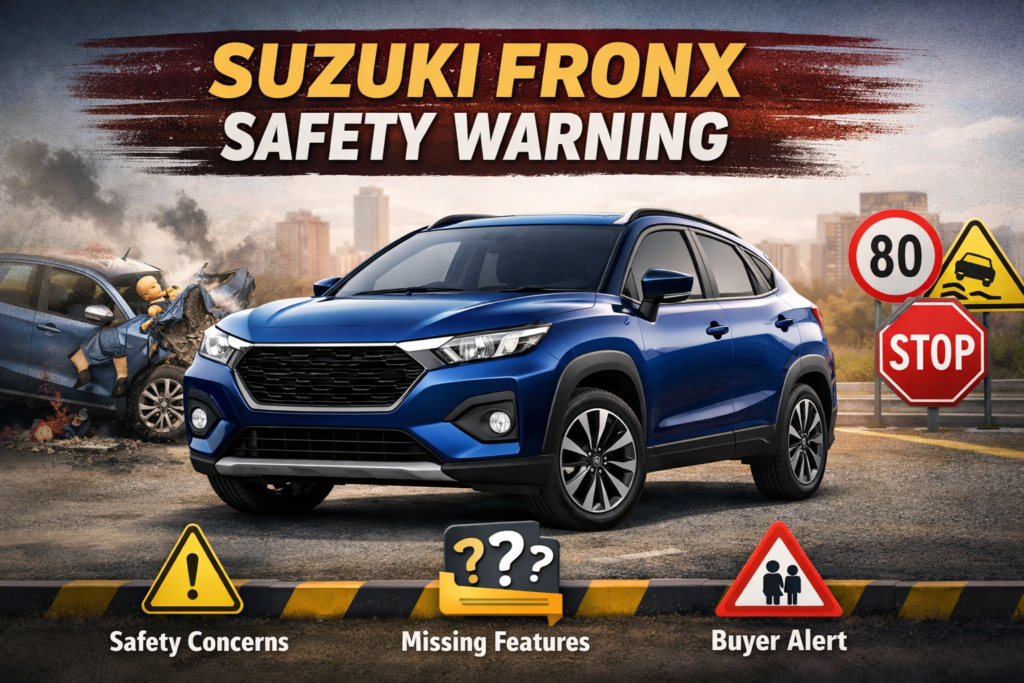
Suzuki Fronx Safety Warning: What Buyers Must Know Before Hitting the Road
Introduction
The compact SUV segment in India is growing rapidly, and Maruti Suzuki has strengthened its position with the launch of the Suzuki Fronx. With its sporty coupe-inspired design, fuel-efficient engines, and brand reliability, the Fronx has quickly gained attention among urban buyers. However, while the car offers style and practicality, safety warnings and limitations associated with the Suzuki Fronx deserve serious attention.
In recent months, discussions around vehicle safety standards, real-world crash performance, and missing features have increased among Indian consumers.

Understanding Safety Warnings in Modern Cars
Before diving into the Suzuki Fronx specifically, it is important to understand what a safety warning actually means in the automotive world.
Safety warnings are not always about a car being unsafe. Instead, they include:
- Alerts about missing advanced safety features
- Limitations in crash protection
- Electronic warnings shown on the dashboard
- Structural or platform-related concerns
- Regulatory safety ratings
In many cases, safety warnings act as buyer awareness indicators, especially for vehicles designed to keep costs competitive.
Overview of Suzuki Fronx Safety Package
The Suzuki Fronx is based on the Heartect platform, which is widely used across several Maruti Suzuki vehicles. The company has improved this platform over time, but it still attracts criticism when compared to global safety benchmarks.
Standard Safety Features Offered
The Fronx comes with several basic safety features, including:
- Dual front airbags (standard across all variants)
- ABS with EBD
- Electronic Stability Program (ESP) in higher trims
- Hill hold assist (automatic variants)
- Rear parking sensors
- Seatbelt reminder system
- High-speed alert system
While these features meet mandatory Indian safety regulations, many buyers expect more in 2025, especially in the compact SUV category.
Major Suzuki Fronx Safety Warnings Explained 1. Limited Airbag Coverage
One of the biggest safety concerns with the Suzuki Fronx is restricted airbag availability.
Most variants offer only two airbags, while competitors in the same segment now provide:
- Six airbags as standard
- Side and curtain airbags for better occupant protection
In side-impact collisions or rollovers, limited airbag coverage can increase the risk of serious injury. This is a major safety warning for families and highway users.
2. Absence of ADAS Technology
Advanced Driver Assistance Systems (ADAS) are becoming increasingly common, even in affordable cars. Unfortunately, the Suzuki Fronx does not offer ADAS features such as:
- Autonomous emergency braking
- Lane keep assist
- Adaptive cruise control
- Blind-spot monitoring
This absence is particularly noticeable when the car is driven at high speeds or in heavy traffic. For buyers upgrading from older vehicles, this gap might not matter much, but tech-savvy customers may see it as a limitation.
3. No Official Global NCAP Rating
Another important Suzuki Fronx safety warning is the lack of an official Global NCAP crash test rating.
Although Maruti Suzuki claims improved structural integrity, the Fronx has not yet been tested publicly under the latest Global NCAP protocols. This creates uncertainty about:
- Front crash protection
- Side impact safety
- Child occupant safety
In today’s market, many buyers rely heavily on crash ratings to judge a vehicle’s real-world safety performance.
4. Lightweight Construction Concerns
The Heartect platform emphasizes lightweight engineering to improve fuel efficiency. While this benefits mileage, it also raises questions about:
- Crash energy absorption
- Structural rigidity during high-speed accidents
Some critics argue that lighter cars may not perform as well in severe collisions, especially when involved with heavier vehicles like trucks or buses.
5. Rear Seat Safety Limitations
Rear seat safety is often overlooked, but it is a crucial factor for families.
Key concerns include:
- No adjustable rear headrests in lower variants
- Limited rear seatbelt pre-tensioners
- No rear airbags
These factors reduce overall passenger safety, particularly for children and elderly occupants during long-distance travel.
Electronic Safety Warnings in Suzuki Fronx
Apart from structural and feature-related concerns, the Suzuki Fronx includes several electronic safety alerts designed to warn drivers before a dangerous situation arises.
Common Dashboard Safety Alerts
Drivers may notice warnings such as:
- Seatbelt not fastened alert
- Door open warning
- Low fuel alert
- Engine temperature warning
- Brake system alert
While these are standard across modern vehicles, they are essential in preventing avoidable accidents caused by driver negligence.
Child Safety: A Critical Area
Child safety remains a sensitive topic for Indian car buyers.
ISOFIX Child Seat Mounts
The Suzuki Fronx offers ISOFIX mounts in selected variants, which is a positive step. However:
- Top tether availability may vary
- No built-in child safety monitoring system
Parents are advised to invest in high-quality child seats and ensure proper installation, especially during highway travel.
How Suzuki Fronx Compares with Rivals on Safety
When compared with rivals like Tata Nexon, Hyundai Venue, and Kia Sonet, the Suzuki Fronx faces tough competition in safety standards.
Competitive Safety Gaps
- Tata Nexon offers a proven 5-star safety rating
- Hyundai and Kia provide six airbags in higher trims
- Some rivals offer stronger body shell ratings
This comparison highlights why safety-conscious buyers must carefully evaluate their priorities before choosing the Fronx.
Real-World Driving Safety Experience
Despite the warnings, many owners report a stable and predictable driving experience in daily use.
Positive safety aspects include:
- Good braking performance
- Stable handling at city speeds
- Reliable traction control system
- Smooth steering feedback
For urban commuting and moderate highway usage, the Fronx performs adequately. However, it is not designed for aggressive driving or extreme off-road conditions.
Suzuki’s Approach to Safety: Cost vs Compliance
Maruti Suzuki traditionally focuses on:
- High fuel efficiency
- Low ownership cost
- Affordable maintenance
This approach often results in regulatory compliance rather than segment leadership in safety innovation. While this strategy helps keep prices competitive, it also explains why advanced safety features are limited.

Should You Be Worried About Suzuki Fronx Safety?
The answer depends on your driving needs and expectations.
Suzuki Fronx Is Suitable If:
- You mainly drive in city conditions
- You prefer fuel efficiency and low service cost
- You are upgrading from an older hatchback
- You drive responsibly at moderate speeds
You Should Reconsider If:
- Safety is your top priority
- You frequently drive on highways
- You want advanced driver assistance features
- You travel with family members regularly
Tips to Improve Safety While Driving Suzuki Fronx
Even with limitations, drivers can significantly enhance safety by following best practices:
- Always wear seatbelts, including rear passengers
- Install high-quality tyres with proper grip
- Maintain correct tyre pressure
- Avoid overspeeding
- Upgrade to variants with ESP and hill hold assist
- Use child seats for young passengers
Responsible driving plays a major role in minimizing accident risks.
Future Safety Updates: What to Expect
With increasing pressure from safety advocacy groups and stricter regulations, Maruti Suzuki may introduce:
- Six airbags as standard
- Improved body structure
- Official crash test ratings
- More electronic safety systems
Future updates could address many current safety warnings associated with the Suzuki Fronx.
Final Verdict
The Suzuki Fronx safety warning is not a deal-breaker but a reality check for buyers. The car meets basic safety norms and delivers reliable daily performance, but it does not lead the segment in occupant protection or advanced safety technology.
For buyers who prioritize affordability, fuel efficiency, and brand trust, the Fronx remains a practical choice. However, those seeking top-tier safety standards should explore alternatives before finalizing their decision.