

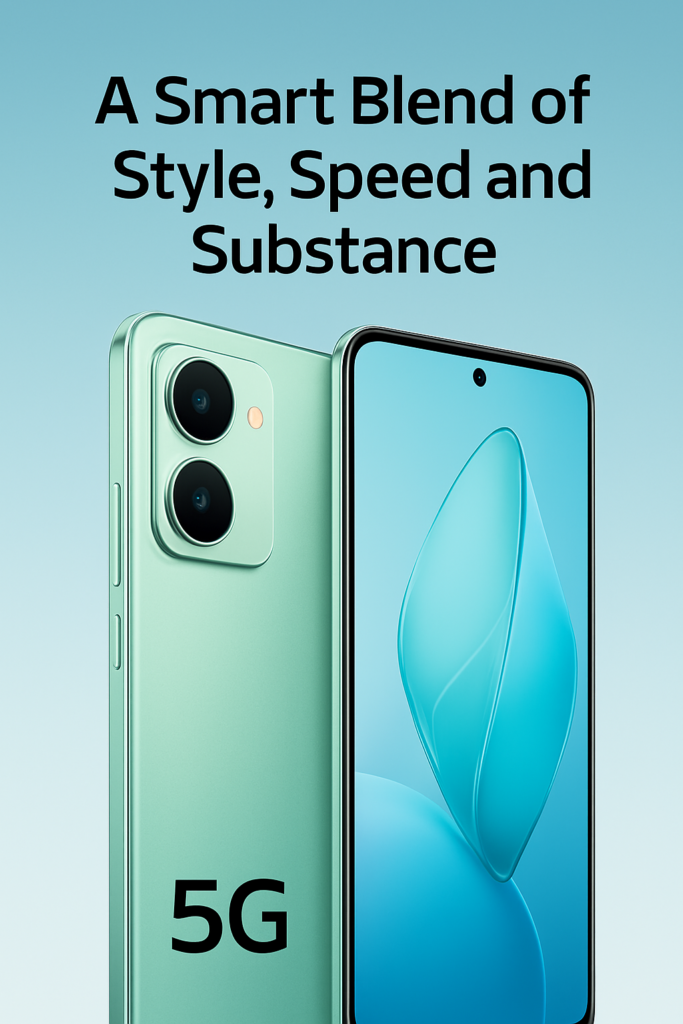
Vivo V29 5G — A Smart Blend of Style, Speed and Substance
In the ever-evolving smartphone world, mid-range devices have made huge strides in offering flagship-level features without burning a hole in your pocket. It stands out as a compelling example — combining a sleek design, powerful internals, and camera prowess in a balanced package. If you’re hunting for a 5G smartphone that offers more than just basics, this may be worth a look.
In this article, we unpack what makes it interesting — from display and performance to camera, battery and real-world experience.

What’s Inside: Key Specifications at a Glance
Before diving deeper, here’s a quick specifications overview of the Vivo V29 5G:
- Display: 6.78-inch AMOLED, Full HD+ resolution, 120 Hz refresh rate.
- Processor: Qualcomm Snapdragon 778G octa-core chipset.
- RAM & Storage: Options like 8 GB RAM + 128 GB storage or 12 GB RAM + 256 GB storage.
- Rear Cameras: Triple rear setup — 50 MP (main) + 8 MP + 2 MP sensors.
- Front Camera: 50 MP selfie camera.
- Battery: 4600 mAh battery with 80 W fast charging support.
- Software: Ships with Funtouch OS 13 (based on Android).
- Colours & Build: Glass back, slim profile; available in Space Black, Majestic Red, Himalayan Blue.
These specifications already show that the phone is built to deliver — but how does it perform in real life? Let’s break down each aspect.
Display & Design — Visual Delight with Premium Feel
The display is often the first thing a user notices — and it doesn’t disappoint. The 6.78-inch AMOLED panel delivers bold colors, deep blacks and bright visuals. At Full HD+ resolution and 120 Hz refresh rate, scrolling, gaming, and video viewing feel fluid and responsive.
In addition, the curved “3D” glass design gives the phone a premium look and comfortable in-hand feel. The rounded edges and slim profile make it easier to hold compared to many bulky alternatives.
Colour-wise, Space Black gives a classic, elegant look, while Himalayan Blue and Majestic Red offer flair for users who like their phone to stand out.
Overall, whether you watch OTT content, browse social media, or play games — the display and build make the V29 5G feel like a premium device.
Performance & Everyday Use — Smooth and Responsive
One of the biggest strengths of it lies under the hood. The Snapdragon 778G chipset is a capable performer in the mid-range / upper mid-range segment. It handles multitasking, gaming, and daily tasks with ease.
With RAM options up to 12 GB + 256 GB storage, the device gives sufficient breathing space for apps, photos, videos, and games.
In real-world usage — from switching between apps, browsing, streaming, or playing moderately heavy games — it delivers smooth performance without noticeable lag. Many of the reviews and spec-sheets highlight that for a mid-range phone, this model punches above its weight category.
In short: if you care about speed and reliability without splurging on a flagship, this device ticks those boxes.
Camera Performance — Versatile and Impressive for Everyday Photography
For many smartphone buyers, camera quality is a deciding factor. It aims to impress here as well.
The rear triple-camera setup — with a 50 MP main sensor — is capable of producing sharp, detailed images, especially in good lighting conditions.The secondary 8 MP and 2 MP lenses add versatility for wider shots or depth-effect portraits.
The 50 MP front camera is a notable feature. If you’re into selfies or video calls, expect bright, detailed shots — useful for social media, vlogging, or casual photography.
In many real-world reviews of the V29 series, users appreciated how the camera delivered “flagship-like” results for daylight photography.
However — like most mid-range phones — low-light performance or very demanding photography (like professional-level zoom/sharpness) may not match high-end devices. But for everyday photography, social media content, and casual use — it remains more than capable.
Battery Life & Charging — Balanced with Fast-Charge Advantage
It comes with a 4600 mAh battery — not the largest, but enough for a full day of regular use given the efficient chipset and AMOLED display.
What really stands out is the 80 W fast-charging support. This allows the phone to recharge quickly — meaning even if you run low, a short charging session can give you enough juice to get through the rest of the day.
For most users — students, office professionals, casual users — this combination of decent endurance + fast charging delivers a worry-free daily experience.
Software & Connectivity — Modern and Feature-Rich
Out of the box, it runs on Funtouch OS 13 (on top of Android), offering a clean and familiar interface.
Connectivity features include dual 5G SIM support, ensuring readiness for current and future network speeds. The phone also supports standard modern connectivity features — making it a balanced daily driver, both for communication and media usage.
For users in India (or regions with growing 5G infrastructure), this means your phone remains relevant for a few years, without becoming obsolete quickly.
Who Is It Best Suited For?
Given its balance of price, features, and performance — it is an excellent choice for:
- Young professionals and students — Need a phone that handles social media, streaming, browsing, apps smoothly, without breaking the budget.
- Photography-enthusiasts (casual / social media users) — Good main + selfie cameras handle daylight and casual photography well.
- Entertainment lovers — Gamers, video streamers, OTT watchers who want a big AMOLED screen and smooth refresh rate.
- Daily users needing reliability — For calls, messaging, browsing, day-to-day tasks with enough battery and fast charging convenience.
However, if you demand top-of-the-line camera performance (low light, professional photography), or extremely heavy gaming/battery-draining tasks, there are still premium phones that may surpass it.
Pros & Cons — Balanced Assessment
What works in favor of Vivo V29 5G:
- Large 6.78″ AMOLED display with smooth 120 Hz refresh — for immersive viewing and smooth scrolling.
- Snapdragon 778G chipset plus up to 12 GB RAM— ensures snappy performance and multitasking.
- Solid camera setup (50 MP main + 50 MP selfie) for everyday photography and social media.
- Slim, premium design with glass back — gives flagship-like feel.
- 80 W fast charging — convenient for busy users.
- 5G-ready — future-proof for network upgrades.
Where it may lag (or what to keep expectations realistic about):
- Battery capacity (4600 mAh) is decent but not massive — heavy users may need mid-day charging.
- Low light photography or demanding camera tasks may not match flagship-grade phones.
- Not a heavy-duty gaming beast — for extremely graphic intensive games, one might see some limitations.
- No massive battery like “end-all day heavy use” phones (some rivals offer 5000–6000 mAh).
Final Verdict — A Balanced Mid-Range Choice
It emerges as a balanced, sensible mid-range 5G smartphone that doesn’t try to be “the cheapest” or “the most expensive” — but aims squarely at value. For those who want a dependable everyday smartphone, capable cameras, smooth display, and reliable performance — without spending flagship-level money — this phone is a compelling option.
If you care about style + substance in a mid-range – strong enough for daily tasks, media, casual content creation, and 5G readiness — it checks the boxes.
In short: for many average users — students, young professionals, social media users — it delivers a balanced smartphone experience in 2025.

Why Tech Arabinda Thinks Vivo V29 5G Deserves Attention
At Tech Arabinda, we believe in highlighting devices that offer real-world value — not just flashy specs. It does just that: it offers a blend of performance, design, and practicality that fits well with everyday needs. Especially for Indian users (or similarly priced markets), this smartphone offers a pragmatic mix of 5G readiness, camera quality, decent battery, and premium feel — all at a mid-range price bracket.
Whether you are buying your first 5G phone or upgrading from a basic model — It is worth considering.