

Which iPhones will no longer work in 2026? Apple products discontinued in 2026

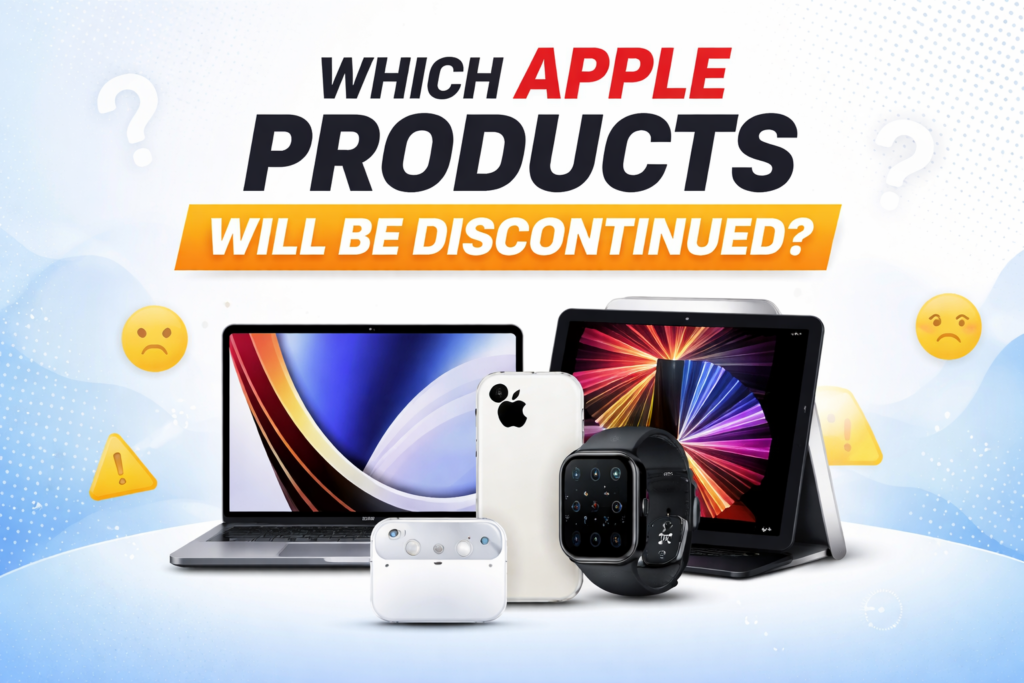
Apple is known not only for launching iconic products but also for quietly discontinuing older ones when technology evolves. Every year, Apple refines its product lineup, removes outdated models, and shifts focus toward innovation. This strategy helps the company stay premium, efficient, and future-ready.
which Apple products are most likely to be discontinued, why Apple takes such decisions, and what it means for consumers. While Apple rarely confirms discontinuations in advance, historical trends, supply chain patterns, and recent product launches give us strong indicators.
Why Does Apple Discontinue Products?
Before identifying specific products, it’s important to understand Apple’s strategy.
Apple usually discontinues products due to:
- Hardware limitations
- Software update constraints
- Low sales performance
- Lineup simplification
- Transition to new technology (like Apple Silicon or USB-C)
Discontinuation does not mean the product suddenly becomes unusable. Apple typically supports discontinued products with software updates and repairs for several years.
iPhone Models Likely to Be Discontinued iPhone SE (2nd Generation)
The iPhone SE (2020) brought flagship performance in a compact, affordable design. However, its outdated design with large bezels and a physical home button no longer aligns with Apple’s modern aesthetic.
Why discontinuation is likely:
- Old design language
- Smaller display compared to competitors
- Apple shifting toward full-screen designs
- Newer SE versions replacing it
Apple has already reduced availability of older SE models in several regions, signaling the end of their lifecycle.
iPhone 13 and iPhone 13 Mini
Apple often discontinues iPhones that are two generations old once newer models stabilize in the market.
Reasons:
- Lineup simplification
- Focus on iPhone 14 and newer models
- Mini variant showing weaker sales historically
The iPhone Mini series, despite being loved by a niche audience, has struggled commercially. Apple seems to be moving away from smaller phones.
iPad Models That May Be Discontinued
Standard iPad (9th Generation)
The 9th-generation iPad remains popular in education and budget segments, but Apple has been gradually modernizing its tablets.
Possible reasons for removal:
- Older design with home button
- Non-laminated display
- Slower processor compared to newer iPads
Apple may replace it with a more modern base iPad that adopts USB-C and slimmer bezels.
iPad mini (5th Generation)
Although compact tablets have loyal fans, Apple is focusing more on productivity-oriented iPads.
Why it may disappear:
- Limited differentiation
- Smaller market demand
- Overlap with larger iPhones and base iPads
Mac Products on the Discontinuation Radar
Intel-Based Macs
Apple’s transition from Intel processors to Apple Silicon is one of the biggest shifts in its history.
Intel Macs likely to be phased out:
- Older MacBook Pro Intel models
- Intel Mac mini
- Intel iMac variants
Apple has clearly stated its long-term commitment to Apple Silicon. Intel Macs will still receive support, but no new Intel models are expected.
MacBook Pro (13-inch with Touch Bar)
The Touch Bar was introduced as a bold experiment, but adoption has been mixed.
Why Apple may discontinue it:
- Low usage by professionals
- Return of physical function keys
- Simplified keyboard experience preferred
Apple is clearly prioritizing traditional keyboards with powerful chips over experimental input methods.
Apple Watch Models That Could Be Retired
Apple Watch Series 3
The Apple Watch Series 3 has been around for many years and struggles with modern watchOS updates.
Reasons for likely discontinuation:
- Limited storage
- Slower performance
- Incompatibility with newer features
Apple has already removed it from official listings in many regions, making its end almost certain.
Older Apple Watch SE Variants
As newer SE models launch, older ones become redundant.
Apple prefers a clear three-tier lineup:
- Premium
- Mid-range
- Budget
Older SE models don’t fit well into this structure anymore.
AirPods and Audio Products at Risk
AirPods (2nd Generation)
While still popular, the 2nd-generation AirPods lack many modern features.
Why discontinuation makes sense:
- No active noise cancellation
- Older Bluetooth technology
- Apple pushing spatial audio and USB-C
As newer AirPods models become more affordable, Apple will likely phase these out.
HomePod (Original Version)
Apple already discontinued the original HomePod once and later brought it back in limited form.
However, with the HomePod mini dominating sales, the larger version may once again face reduced focus.
Accessories Apple May Stop Selling
Lightning-Based Accessories
With Apple’s shift toward USB-C, many Lightning accessories are slowly disappearing.
Examples include:
- Lightning EarPods
- Older charging cables
- Legacy adapters
Regulatory pressure and global charging standards are pushing Apple toward universal ports.
Older Magic Accessories
Magic Mouse, Magic Keyboard, and Magic Trackpad versions with Lightning ports are expected to be replaced by USB-C models, leading to older versions being discontinued.
Products Already Quietly Discontinued
Apple often removes products without major announcements.
Some examples:
- iPod Touch
- Older Apple TV models
- Certain iMac configurations
- Legacy AirPort routers
These silent exits are part of Apple’s long-term ecosystem cleanup.
What Happens After a Product Is Discontinued?
Many users worry about discontinuation, but Apple follows a structured support policy.
After discontinuation:
- Software updates continue for years
- Security patches are provided
- Repair services remain available
- Third-party accessories still work
So, owning a discontinued Apple product is not a problem in the short or medium term.
Should You Buy a Product That May Be Discontinued?
That depends on your usage.
Good reasons to buy:
- Heavy discounts
- Stable performance
- No need for latest features
Reasons to avoid:
- Want long-term updates
- Need resale value
- Prefer future-proof hardware
Apple’s current lineup carefully before purchasing older models.

Apple’s Long-Term Direction
Apple’s future focuses on:
- Apple Silicon dominance
- AI-powered features
- Ecosystem integration
- Sustainability and recycled materials
- Simplified product categories
Any product that does not align with this vision becomes a candidate for discontinuation.
Final Thoughts
Apple’s product discontinuations are not random. They are carefully planned decisions driven by technology, design philosophy, and market demand. While it may be disappointing to see popular products phased out, these changes allow Apple to innovate faster and deliver better experiences.
Frequently Asked Questions
1. Which Apple products will be discontinued in 2026?
Apple is expected to discontinue some older iPhones, iPads, Macs, and accessories as newer models replace them. Apple typically removes older products from its lineup after major launches.
2. Which iPhones could be discontinued in 2026?
Older iPhone models are the most likely candidates for discontinuation when Apple introduces new flagship devices. Apple usually retires previous-generation models from its official store.
3. Will Apple discontinue the iPhone SE in 2026?
Apple has not officially confirmed this. However, industry reports and product cycles suggest the iPhone SE lineup could change if a newer model is introduced.
4. Which Apple products should I avoid buying in 2026?
Products that are expected to be replaced soon or receive limited software support may not be the best long-term purchase. Checking Apple’s latest product lineup before buying is recommended.
5. Will discontinued Apple products still work?
Yes. Discontinued Apple products continue to function normally, but they may eventually stop receiving software updates and hardware service.
6. How long does Apple support its devices?
Apple generally provides software updates for around 5–7 years, although the exact support period varies by device and model.
7. Which Apple devices are expected to lose software support in 2026?
Some older iPhones, iPads, Macs, and Apple Watches may reach the end of their software support cycle in 2026, depending on Apple’s update policy.
8. Is it safe to buy a discontinued Apple product?
Yes, if it still receives software updates and meets your needs. However, newer models usually offer longer support and better performance.
9. Why does Apple discontinue older products?
Apple retires older products to simplify its lineup, introduce newer technology, improve performance, and focus on devices that support the latest software features.
10. How can I check if an Apple product has been discontinued?
You can check Apple’s official website, compare the latest product lineup, or follow Apple’s product announcements to see which devices are no longer available.
11. What happens after Apple discontinues a product?
After discontinuation, the product may still receive software updates for some time, but it will eventually become vintage or obsolete as support ends.
12. Which Apple products are worth buying in 2026?
The latest-generation iPhones, iPads, Macs with Apple silicon, Apple Watches, and AirPods are generally the best options for long-term software support and performance.