

Explore the Camera Power of Lava Agni 2
A Deep Dive into Photography, Video, and Imaging Capabilities

In today’s smartphone world, the camera has arguably become the single most important feature for many users. Whether you’re a casual shutterbug, a social-media enthusiast, or someone who wants to capture memorable moments without carrying a separate camera, smartphone photography is key. The camera setup of Lava’s latest mid-range contender promises to punch above its price tag, delivering respectable performance across various shooting scenarios.
📸 Quad Camera Setup — More Than Meets the Eye
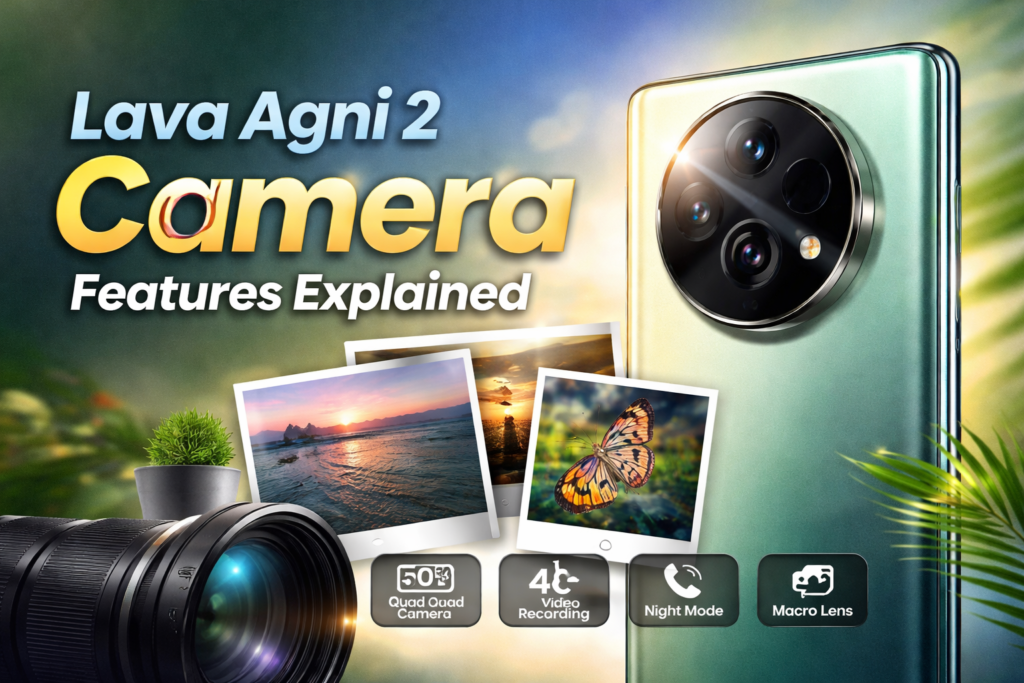
One glance at the rear module and you’ll notice a quad-camera array thoughtfully arranged to handle diverse photographic needs. Rather than relying on a single sensor, the combination of lenses provides flexibility for landscapes, portraits, wide scenes, and even close-up details.
Here’s a breakdown of what each camera brings to the table:
🔎 Primary 50 MP Shooter
At the heart of the setup lies a 50-megapixel main camera, which acts as your go-to lens for most shots. It features:
- High-resolution sensor for detailed captures
- Wide aperture to let in more light
- Phase Detection Autofocus (PDAF) for sharper focus acquisition
What does this mean in real-world terms? The high pixel count doesn’t just boost detail — it also enables pixel binning, a technique that combines data from neighboring pixels to enhance low-light performance and reduce noise. This results in cleaner, brighter photos even when lighting isn’t ideal.
💡 Tip: In daylight or well-lit environments, you can expect punchy colours and well-defined textures thanks to this sensor’s capability.
🌄 8 MP Ultra-Wide Lens
Complementing the primary lens is a dedicated ultra-wide-angle sensor. This isn’t just a gimmick — it lets you capture more in a single frame, ideal for:
- Landscapes
- Group photos in tight spaces
- Architectural shots
- Travel imagery
With its broader field of view, you can fit entire scenes into your shots without stepping back. However, some reviewers note that ultra-wide photos can appear slightly washed out or lower in dynamic range compared to the main sensor’s output — making it best suited for daylight conditions.
🔍 2 MP Macro and Depth Sensors
Rounding out the rear setup are two 2 MP sensors:
These two modules aren’t about resolution — they’re about utility. The macro sensor gets you in tight to textures and small subjects, while the depth sensor helps digitally isolate subjects from the background. While neither competes with higher-end phones’ dedicated optics, they’re useful extras at this price point.
🤳 16 MP Front Camera — Selfies and Video Calls
On the front, a 16-megapixel sensor sits ready for selfies, video calls, and portrait shots. It uses a wide-angle lens that comfortably fits more of your face and background into the frame, perfect for group selfies or scenic shots of you in the moment.
The front camera also supports various software-based enhancements such as beauty effects that can smooth skin tones and highlight facial features. Flash is handled via the screen’s brightness boost rather than a separate LED, which makes it easier to take selfies in dim lighting without harsh glare.
🎦 Video Capabilities — Beyond Still Photography
For many today, a smartphone’s video performance is just as crucial as its photography. This device handles video capture with the following capabilities:
📹 Rear Video Recording
- 4K at 30 fps with the main camera
- 1080p at 30 fps at multiple focal points
Filming in 4K gives you much greater detail for playback on larger screens or for cropping in post-production without significant quality loss. The wide dynamic range helps maintain highlights and shadows even in varying lighting conditions.
🚫 However, one important limitation to note: ultra-wide video capture isn’t available, meaning all high-resolution clips are recorded with the primary lens only.
🤳 Front Camera Video
For video calls and self-recording, the front sensor shoots at 1080p @ 30 fps — more than enough for video chats, quick social content, and vlog-style clips.
📱 Camera App Features — Bringing Creativity to Your Fingertips
A camera is only as good as the software behind it. The imaging app on this device packs a robust suite of shooting modes and tools to make photography fun and intuitive. Here’s what you get:
🌟 Shooting Modes Included
- Night Mode for improved low-light shots
- Portrait Mode with background blur
- HDR to balance highlights and shadows
- Pro Mode with manual controls
- UHD & Panorama
- Slow Motion
- Timelapse
- Macro Mode
- AI Enhancements and Filters
This range helps both beginners and enthusiasts get more out of their camera hardware. The Pro Mode, especially, appeals to photographers who want control over ISO, exposure, white balance, and focus. The AI modes intuitively recognize scenes and adjust settings, making it easier to get pleasing results straight out of the camera without much tinkering.
🌆 Real-World Camera Performance — What to Expect?
Specifications tell part of the story, but how does the camera actually perform in everyday use? Here’s a balanced look based on real-world testing and reviewer impressions:
🌞 Daylight Photography
Under bright sunlight, the primary sensor captures vibrant photos with good contrast and detail. Colours tend to pop naturally without excessive oversaturation. However, ultra-wide shots can appear slightly less punchy and a bit flat in comparison.
🌇 Low-Light Shooting
Low-light photography is commendable thanks to pixel binning and Night Mode. Images are decently bright with moderate noise reduction, though they may not match flagship performance. Still, for social media and casual snaps, the results are impressive for the segment.
🤳 Selfie Output
Selfies taken with the front camera are clear and detailed in good lighting, though they may look a bit washed-out in challenging light. Still, they’re perfectly acceptable for regular use — especially with screen flash support.
📸 Close-Up and Macro
The macro sensor lets you get close to flowers, textures, and small objects, but the low resolution means fine detail isn’t its strong suit. It’s fun to experiment with, but don’t expect pro-level macro shots.
Verdict — Is the Camera Worth It?
The camera system on this device strikes a solid balance between versatility and simplicity. It covers almost all photography bases you’d need in daily life:
✅ High-resolution primary sensor with good detail ✅ Ultra-wide lens for expansive scenes ✅ Useful portrait and macro tools ✅ Video capture up to 4K ✅ Rich feature set in the camera app
Still, there are trade-offs. Ultra-wide images lack depth in certain light conditions, macro shots are average, and video capture is limited to the main camera. Yet, when viewed in context of its price segment, it delivers a well-rounded imaging experience that goes beyond basic photography.

Final Thoughts
The camera capabilities of this smartphone make it a compelling choice for anyone seeking a balanced camera phone without spending a premium. For daily moments, social-media content, travel scenes, and even creative explorations, the imaging system is versatile and capable. Whether you’re new to smartphone photography or upgrading from an older device, this phone’s camera can elevate your visual storytelling.