


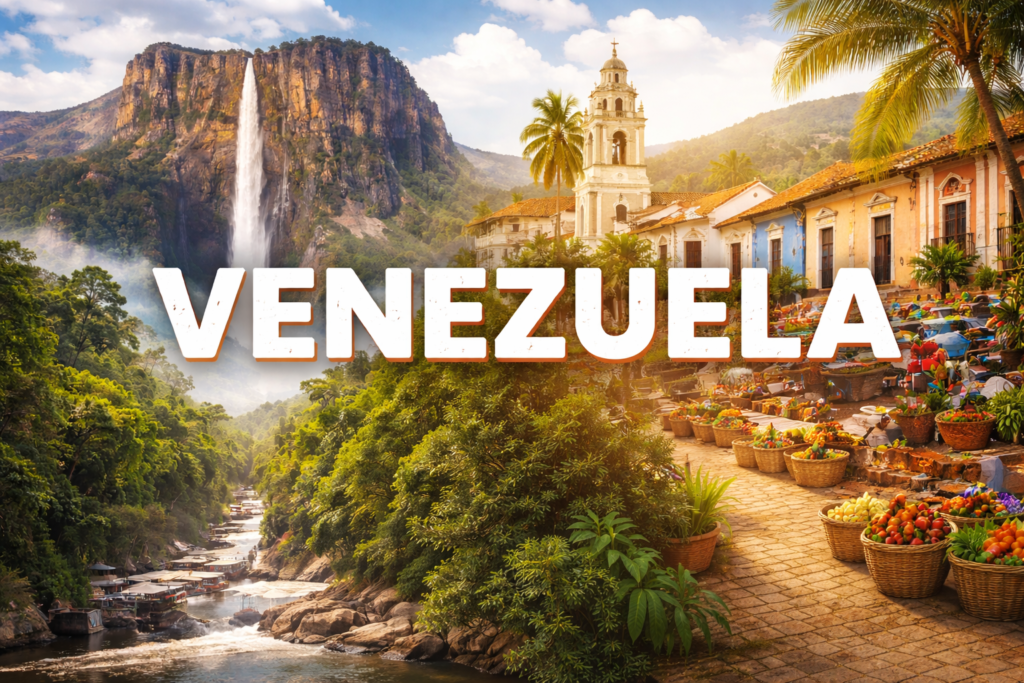

Venezuela is a country that often appears in global headlines, yet its full story goes far beyond news snippets and political debates. Located on the northern coast of South America, Venezuela is a land of striking contrasts—rich natural beauty alongside deep economic challenges, cultural vibrancy mixed with social struggle, and immense potential shaped by a complex past. To truly understand Venezuela, one must explore its history, people, resources, and the forces that continue to shape its future.
Geographic Beauty and Natural Wealth
Venezuela is one of the most geographically diverse countries in Latin America. It shares borders with Colombia, Brazil, and Guyana, while the Caribbean Sea stretches along its northern coastline. The country is home to tropical beaches, vast plains known as llanos, dense Amazon rainforests, and towering mountains in the Andes region.
One of Venezuela’s most famous natural wonders is Angel Falls, the highest waterfall in the world. The country also boasts rich biodiversity, with thousands of plant and animal species found across its varied ecosystems. These natural assets make Venezuela a place of exceptional environmental value and tourism potential.
Beneath its land lies another form of wealth—vast reserves of oil, which have played a central role in shaping the nation’s destiny.
A Brief Historical Background
Before European colonization, Venezuela was inhabited by indigenous communities with distinct cultures and traditions. In the late 15th century, Spanish explorers arrived, beginning centuries of colonial rule. The struggle for independence reached its peak in the early 19th century under the leadership of SimónBolívar, a key figure in South American liberation movements.
After gaining independence from Spain in 1821, Venezuela experienced long periods of political instability, military rule, and economic dependency on exports. The discovery of oil in the early 20th century transformed the country rapidly, bringing wealth, urbanization, and global influence—but also laying the groundwork for future economic imbalance.
Oil Economy: Blessing and Burden
Venezuela possesses one of the largest proven oil reserves in the world. For decades, petroleum exports fueled government revenue, funded social programs, and positioned the country as a major energy supplier. However, heavy dependence on a single resource made the economy vulnerable to price fluctuations and mismanagement.
When oil prices dropped and production declined, the impact was severe. Industries outside the energy sector were underdeveloped, and the lack of diversification led to shortages, inflation, and unemployment. The oil sector, once a symbol of national pride, became closely linked to economic crisis.
This dependence illustrates a crucial lesson in economic planning—natural resources alone do not guarantee sustainable prosperity.
Political Landscape and Governance
Modern Venezuelan politics have been marked by strong ideological divisions. In the late 20th century, dissatisfaction with traditional leadership paved the way for new political movements promising social equality and reform. These shifts dramatically altered the country’s governance structure and economic policies.
Over time, political tensions intensified, leading to disputes over democratic processes, institutional authority, and civil liberties. International reactions have varied, with some nations offering support while others imposed sanctions. These external pressures, combined with internal challenges, have further complicated governance.
Despite disagreements, many Venezuelans continue to seek peaceful solutions, institutional stability, and transparent leadership.
Economic Crisis and Daily Life
The economic crisis has deeply affected daily life in Venezuela. Hyperinflation reduced purchasing power, essential goods became scarce, and public services weakened. Families faced difficult choices, and many professionals left the country in search of better opportunities.
Yet, resilience remains a defining trait of Venezuelan society. Informal economies emerged, community support networks strengthened, and people adapted creatively to challenging conditions. Markets, street vendors, and local initiatives became essential lifelines for survival.
Understanding this reality requires empathy—behind economic statistics are real lives shaped by courage and adaptability.
Migration and the Global Impact
In recent years, millions of Venezuelans have migrated to neighboring countries and beyond. This movement has become one of the largest migration crises in modern Latin American history. People left in search of safety, employment, healthcare, and education.
Host countries faced both challenges and opportunities as Venezuelan migrants contributed skills, labor, and cultural diversity. Despite difficulties, many migrants continue to maintain strong emotional ties to their homeland, sending remittances and hoping for a future return.
Migration has transformed Venezuela’s story into a global one, connecting its fate to international cooperation and humanitarian response.
Culture, Music, and National Identity
Despite hardships, Venezuelan culture remains vibrant and expressive. Music plays a central role, from traditional joropo rhythms to modern Latin pop influences. Dance, art, and literature reflect both joy and struggle, offering powerful outlets for storytelling.
Food is another cornerstone of national identity. Dishes like arepas, pabellón criollo, and hallacas are deeply rooted in tradition and family life. Even in times of scarcity, culinary culture continues to symbolize unity and heritage.
Festivals, local customs, and strong family bonds reinforce a sense of belonging that transcends political or economic conditions.
Education and Human Capital
Venezuela once had one of the strongest education systems in the region, producing skilled professionals in medicine, engineering, and science. Over time, underfunding and migration affected institutions, leading to resource shortages and reduced access.
However, the value placed on education remains strong. Many Venezuelans continue to pursue learning through alternative means, online platforms, and international programs. This commitment to knowledge represents a critical foundation for future recovery.
Human capital—skills, creativity, and determination—remains one of Venezuela’s greatest assets.
International Relations and Sanctions
Global relations have significantly influenced Venezuela’s economic and political environment. Sanctions, diplomatic disagreements, and shifting alliances have affected trade, financial access, and development opportunities.
Supporters argue that external pressure encourages reform, while critics claim it worsens humanitarian conditions. The reality is complex, involving geopolitical interests and domestic governance issues.
Long-term stability will likely depend on dialogue, regional cooperation, and policies that prioritize citizens’ well-being over confrontation.
Signs of Change and Hope for the Future
Despite ongoing challenges, signs of gradual change have begun to appear. Local entrepreneurship, small business growth, and limited economic adjustments have created cautious optimism. Some sectors, such as agriculture and digital services, show potential for revival.
Young people, both inside and outside the country, play a vital role in shaping Venezuela’s future. Through innovation, advocacy, and cultural exchange, a new generation is redefining what progress looks like.
While recovery will not be easy or immediate, history shows that nations can rebuild when resilience meets opportunity.

Conclusion: Understanding Venezuela Beyond Headlines
Venezuela is more than a crisis narrative. It is a country with deep historical roots, extraordinary natural beauty, rich cultural traditions, and a population defined by strength and creativity. Its challenges are real and serious, but so is its potential for renewal.
To understand Venezuela is to look beyond simplified stories and recognize the complexity of its journey. With thoughtful leadership, inclusive policies, and global cooperation, the path toward stability and growth remains possible.