

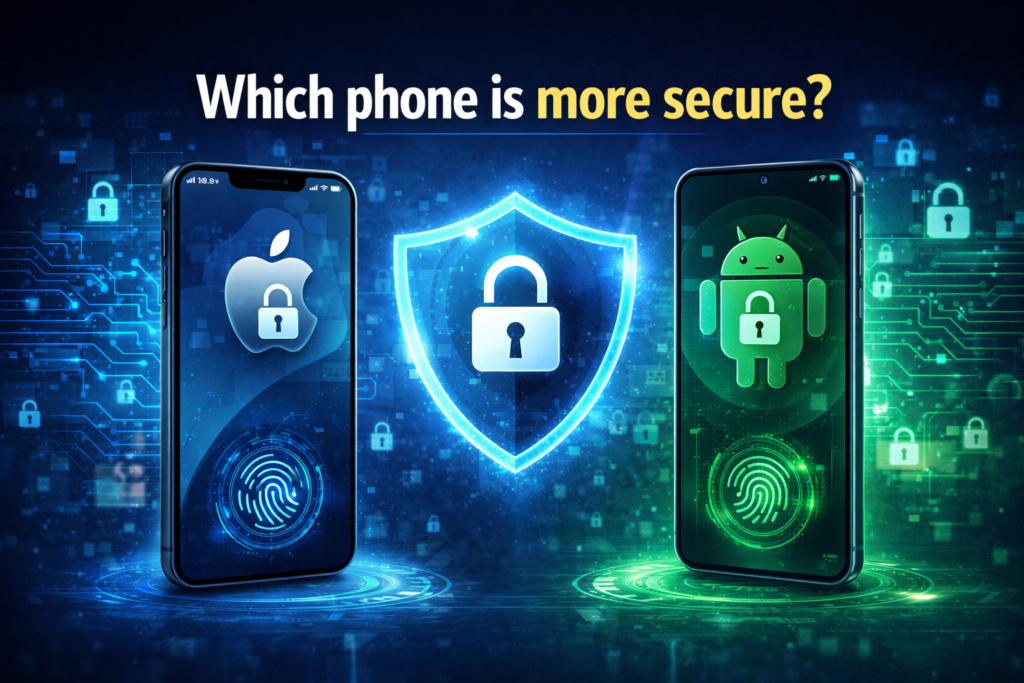

In today’s digital world, smartphones are no longer just communication tools. They store our private photos, financial data, passwords, personal conversations, and even business secrets. With cybercrime increasing every year, one important question every user must ask is: which phone ismore secure?
Choosing a secure smartphone is no longer optional—it is a necessity. From hackers and malware to data tracking and privacy leaks, modern smartphones face countless threats. The phone security, compare major platforms, and decide which smartphone offers the strongest protection in 2026.
Why Smartphone Security Matters More Than Ever?
Smartphones have become digital wallets, identity cards, and workstations. A single security breach can lead to:
- Financial loss through banking or UPI fraud
- Identity theft
- Data leaks and blackmail
- Unauthorized access to emails and social media
- Business data exposure
As technology evolves, attackers become smarter. That’s why phone security depends not only on hardware but also on software updates, encryption, and the company’s privacy policies.
What Makes a Phone Secure?
Before comparing phones, let’s understand the key elements that define smartphone security.
Operating System Protection
The operating system controls everything. A secure OS includes strong sandboxing, app permission control, and fast vulnerability patching.
Software Updates
Regular security updates fix newly discovered vulnerabilities. Phones that receive long-term updates remain safer for years.
Hardware Security
Modern phones use secure chips that protect sensitive information like fingerprints, face data, and encryption keys.
App Store Control
Strict app review policies reduce the risk of malware entering your device.
Privacy Features
Control over tracking, permissions, and data sharing adds another layer of safety.
Android vs iPhone: The Core Security Debate
When asking which phone is more secure, the debate usually comes down to Android versus iPhone.
iPhone Security Overview
Apple designs both hardware and software, allowing deep integration of security features. iPhones use:
- End-to-end encryption
- Secure Enclave for biometric data
- Strict App Store review process
- Long-term software updates (5–7 years)
Apple also limits system access, making it harder for malware to operate.
Android Security Overview
Android offers flexibility and customization, but this openness comes with risks. Security depends heavily on the manufacturer.
Advantages include:
However, not all Android phones receive timely updates, which can leave security gaps.
Which iPhone Is the Most Secure?
All modern iPhones follow the same security architecture, but newer models receive longer update support.
Key security strengths of iPhones:
- iOS updates released simultaneously worldwide
- No default app sideloading
- Strong privacy controls
- Locked bootloader
Even older iPhones remain secure longer compared to most Android devices.
Verdict: iPhones are among the most secure consumer smartphones available today.
Which Android Phones Are the Most Secure?
Not all Android phones are equal. Some brands focus heavily on security.
Google Pixel Phones
Google Pixel devices are considered the safest Android phones.
Security features include:
- Monthly security updates
- Titan M security chip
- Clean Android experience
- Advanced malware detection
Pixels receive updates directly from Google without delay.
Samsung Galaxy Phones
Samsung offers strong security through its Knox platform.
Samsung security highlights:
- Knox hardware protection
- Secure Folder feature
- Long software update support on flagship models
- Enterprise-level protection
High-end Samsung phones are extremely secure when kept updated.
Other Android Brands
Many budget or mid-range phones receive fewer updates and slower patches, reducing long-term safety.
Feature Phone vs Smartphone: Which Is Safer?
Some users believe feature phones are more secure because they lack apps. While they have fewer attack surfaces, they also lack encryption and modern protection.
Smartphones:
- Strong encryption
- Biometric authentication
- Secure app isolation
Feature phones:
- Limited internet exposure
- Minimal data storage
- Weak or no encryption
Reality: A well-maintained smartphone is more secure than a basic phone.
Can Cheap Phones Be Secure?
Price does not always equal safety, but extremely low-cost phones often compromise on updates and hardware security.
Common risks with cheap phones:
- No long-term updates
- Outdated Android versions
- Preinstalled risky apps
- Weak encryption
If security matters, investing in a reputable brand is always better.
Privacy vs Security: Are They the Same?
Not exactly. Security protects your data from attackers, while privacy controls how companies use your data.
Apple focuses strongly on privacy. Google focuses on security but collects usage data for services. Some Android brands collect additional analytics.
Choosing a phone requires balancing both.
Business and Professional Users: Best Secure Phones
For professionals handling sensitive data, security becomes critical.
Best choices:
- iPhone for corporate environments
- Google Pixel for pure Android security
- Samsung Galaxy with Knox for enterprise use
These devices support remote wipe, encryption, and secure work profiles.
How User Behavior Affects Phone Security?
Even the most secure phone can be compromised by careless usage.
Common mistakes:
- Installing unknown apps
- Clicking suspicious links
- Using weak passwords
- Ignoring software updates
Security is a combination of technology and user awareness.
Tips to Make Any Phone More Secure
Regardless of the brand, follow these steps:
- Always update your phone
- Use a strong screen lock
- Enable biometric authentication
- Avoid third-party app stores
- Review app permissions regularly
- Use official chargers and cables
These habits significantly reduce risks.
Government Surveillance and Phone Security
Some users worry about government access. While no phone is completely immune, encrypted devices make unauthorized access extremely difficult.
iPhones and Pixels provide the strongest protection against mass surveillance.
Final Verdict:
After analyzing all factors, here is the clear conclusion:
- Most secure overall: iPhone
- Most secure Android: Google Pixel
- Best enterprise security: Samsung Galaxy (flagship models)
- Least secure: Phones with delayed updates and unknown brands
If security is your top priority, choose a phone with long-term updates, strong encryption, and a trusted ecosystem.

Should You Upgrade for Better Security?
If your phone no longer receives security updates, upgrading is strongly recommended. Cyber threats evolve quickly, and outdated devices become easy targets.
Conclusion
Choosing a secure phone is about more than brand loyalty. It is about understanding how security updates, hardware protection, and privacy policies work together. In 2026, smartphones hold our digital lives, and protecting them is non-negotiable.