

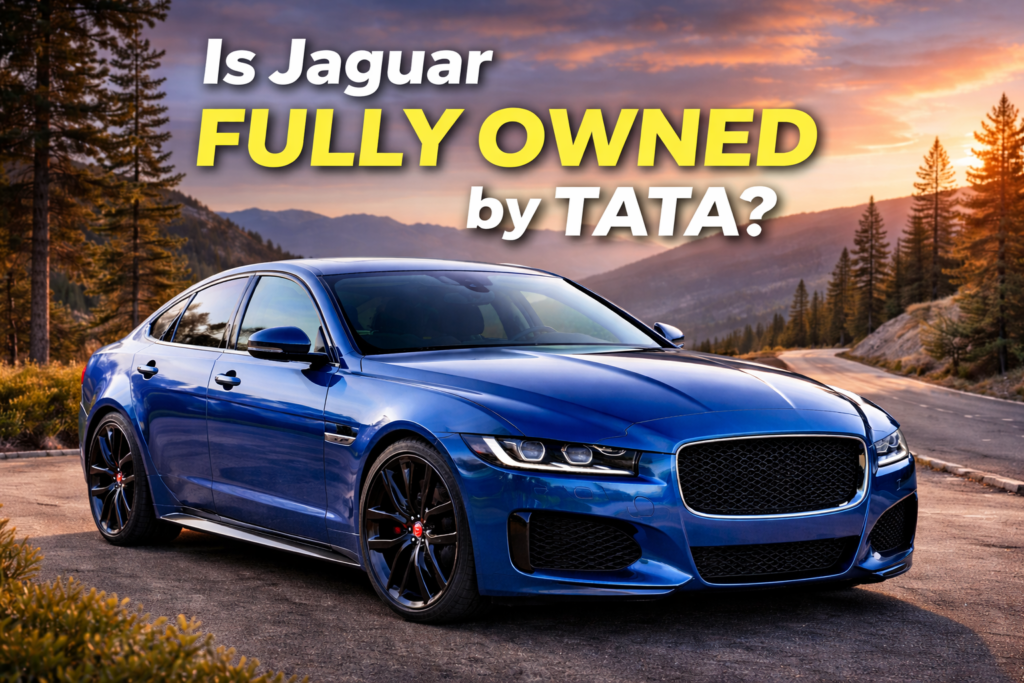

When people hear the name Jaguar, the first images that come to mind are luxury sedans, roaring engines, and a proud British automotive legacy. At the same time, Tata Group represents Indian industrial strength, global ambition, and long-term vision. Over the years, a common question has surfaced among car enthusiasts, investors, and everyday readers alike: Is Jaguar completely owned by Tata?
The short answer is yes, but the full story is far more interesting and layered than a simple ownership claim. The history, structure, strategic reasons, and real-world impact of Tata’s acquisition of Jaguar, while also clarifying common misconceptions.
Understanding Jaguar: A Legacy Built on British Engineering
Jaguar is not just a car manufacturer; it is a symbol of British automotive excellence. Founded in 1922 as the Swallow SidecarCompany, Jaguar initially focused on motorcycle sidecars before transitioning into automobile production.
Over the decades, the brand became known for:
- Elegant design
- High-performance engines
- Luxury interiors
- Strong motorsport heritage
By the mid-20th century, Jaguar had become a respected global name, competing with European luxury brands and gaining popularity in North America.
However, maintaining a premium automotive brand requires massive investment, constant innovation, and access to global markets—challenges that Jaguar struggled with at different points in its history.
Jaguar Before Tata: A Journey Through Multiple Owners
Before becoming part of an Indian conglomerate, Jaguar changed hands several times.
Early Struggles and British Ownership
Jaguar faced financial instability in the 1960s and was merged with other British car manufacturers under government-backed entities. These mergers often led to management inefficiencies and quality issues.
Ford’s Era: 1989–2008
In 1989, Ford Motor Company acquired Jaguar. The American automaker aimed to turn Jaguar into a global luxury competitor.
While Ford invested heavily in technology and manufacturing, Jaguar continued to face:
- High production costs
- Limited model range
- Declining profitability
By the mid-2000s, Ford decided to exit its premium brand portfolio to focus on its core business.
This decision opened the door for a historic shift.
Tata Motors Enters the Picture
In 2008, Tata Motors, part of the larger Tata Group, announced the acquisition of Jaguar and Land Rover from Ford.
This move surprised many global analysts. At the time, Tata Motors was best known for commercial vehicles and affordable passenger cars in India. Buying two luxury British brands was seen as a bold and risky step.
Yet, it turned out to be one of the most successful acquisitions in automotive history.
So, Is Jaguar 100% Owned by Tata?
The Clear Answer
Yes, Jaguar is fully owned by Tata Motors.
More specifically:
- Tata Motors owns Jaguar Land Rover (JLR)
- Jaguar operates as a brand under the JLR umbrella
- Tata Motors holds 100% ownership stake in JLR
There are no partial owners, no shared control, and no remaining stakes from Ford or any other company.
Jaguar Land Rover: The Operating Structure Explained
Rather than running Jaguar as a standalone company, Tata Motors combined it with Land Rover under a single entity: Jaguar Land Rover Automotive plc.
This structure allows:
- Shared research and development
- Cost-efficient manufacturing
- Unified electric vehicle strategy
- Stronger global branding
Despite this shared structure, Jaguar and Land Rover maintain separate brand identities, design philosophies, and customer bases.
Does Tata Control Jaguar’s Design and Engineering?
One of the biggest misconceptions is that Tata Motors “Indianized” Jaguar after the acquisition. In reality, Tata adopted a hands-off ownership approach.
Key Facts:
- Jaguar’s design studios remain in the United Kingdom
- Engineering and R&D teams are largely British and European
- Brand decisions are made independently
- Tata focuses on funding, strategy, and long-term vision
This approach helped preserve Jaguar’s heritage while giving it financial stability.
Why Tata Bought Jaguar: The Strategic Reasoning
Tata Motors didn’t acquire Jaguar merely for prestige. The decision was deeply strategic.
1. Global Expansion
Jaguar gave Tata Motors instant access to:
- European markets
- North American consumers
- Established luxury car buyers
2. Technology Transfer
Jaguar brought advanced expertise in:
- Engine technology
- Vehicle safety
- Luxury interiors
- Performance engineering
3. Brand Portfolio Diversification
Tata’s portfolio expanded from budget vehicles to high-end luxury brands, strengthening its global position.
Financial Impact of the Acquisition
Initially, the acquisition faced challenges due to the global financial crisis of 2008. However, within a few years, Jaguar Land Rover became a major revenue generator for Tata Motors.
At its peak, JLR contributed:
- A significant share of Tata Motors’ global revenue
- Strong profit margins compared to mass-market vehicles
- Enhanced global brand recognition for the Tata Group
Though the luxury auto market has faced recent disruptions, the long-term value of the acquisition remains strong.
Jaguar’s Shift Toward an Electric Future
Under Tata ownership, Jaguar has made a bold announcement: it plans to become a fully electric luxury brand in the coming years.
This transformation includes:
- Ending production of internal combustion engines
- Developing premium electric platforms
- Competing with next-generation luxury EV brands
Tata’s investment in battery technology and sustainability plays a crucial role in supporting this transition.
Is Jaguar Still a British Brand?
This is a question driven more by emotion than business logic.
The Honest Answer:
Jaguar remains British in identity, design, and heritage, even though ownership is Indian.
Ownership does not erase a brand’s cultural roots. Many global brands operate under foreign ownership while maintaining their original identity.
Examples include:
- British brands owned by foreign groups
- American companies with global investors
- European luxury houses owned by international conglomerates
Jaguar fits perfectly into this globalized business model.
How Tata’s Ownership Changed Jaguar’s Reputation
Before Tata, Jaguar was often criticized for:
- Reliability issues
- Limited innovation
- Inconsistent quality
Post-acquisition improvements include:
- Better build quality
- Modern infotainment systems
- Advanced safety features
- Clear product roadmap
These changes helped restore confidence among customers and critics alike.
Common Myths About Jaguar and Tata
Myth 1: Jaguar Is No Longer British
Reality: Design and engineering remain UK-based.
Myth 2: Tata Uses Jaguar Technology Only for Indian Cars
Reality: Technology sharing is limited and strategic, not exploitative.
Myth 3: Jaguar Lost Its Luxury Status
Reality: Jaguar continues to compete in the premium segment globally.
The Bigger Picture: Tata’s Global Automotive Vision
Jaguar is just one part of Tata’s broader automotive ambition. The group aims to:
- Lead in electric mobility
- Build sustainable manufacturing systems
- Expand global footprint
- Invest in future-ready technologies
Jaguar plays a critical role in this vision by acting as a premium innovation hub.

What This Ownership Means for Buyers and Fans
For consumers, Tata’s ownership offers reassurance rather than concern.
Benefits include:
- Long-term brand stability
- Continued innovation
- Better after-sales support
- Stronger global presence
For fans, it means Jaguar’s legacy is protected, not diluted.
Final Verdict:
Yes, Jaguar is completely owned by Tata Motors, and this ownership has proven to be more beneficial than harmful.
Instead of interfering, Tata empowered Jaguar to:
- Stay true to its roots
- Modernize its lineup
- Prepare for an electric future
This partnership shows how thoughtful global ownership can preserve heritage while driving progress.