

The Surprising Viral Incident and Evolving Legacy of a Global Icon

The world’s landmarks often serve as more than physical structures — they are symbols of freedom, resilience, and shared history. Among these, one particular statue stands tall in the global imagination as a beacon of hope and opportunity. Recently, however, something unexpected happened halfway across the globe that quickly captured global attention and sparked online debate.
A Viral Moment: When a Replica Falls
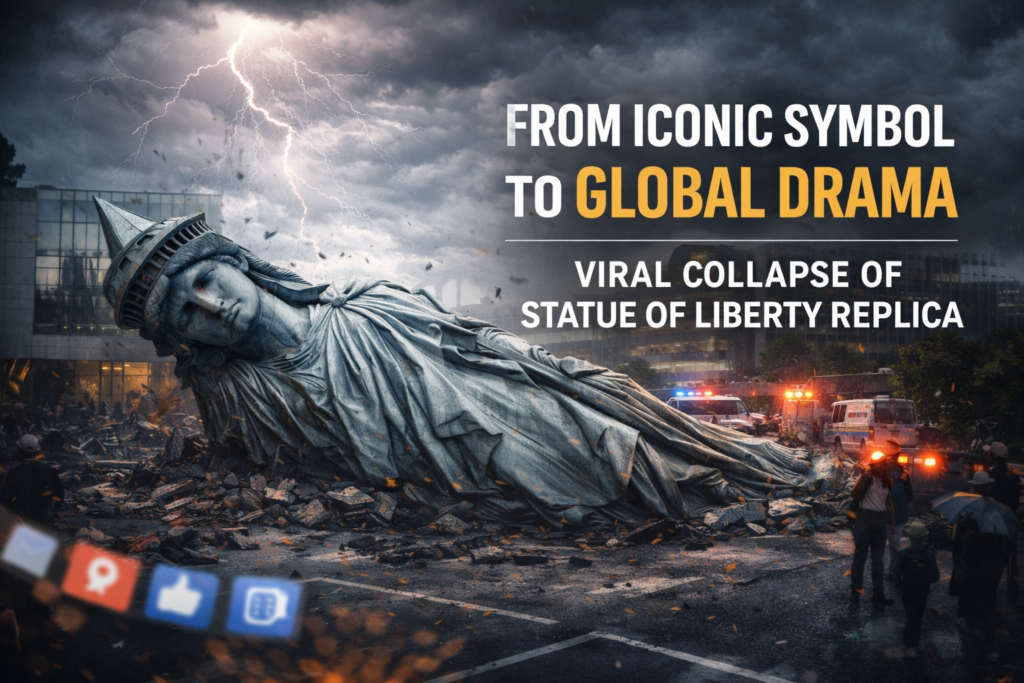
On December 15, 2025, dramatic video footage began circulating on social media showing a tall statue resembling the famous monument collapsing during a powerful storm in a Brazilian city. Videos captured the statue leaning forward before crashing onto a parking lot, generating reactions worldwide. It didn’t take long for the clip to go viral, with users sharing and repurposing it across platforms like X (formerly Twitter).
Local authorities in the southern Brazilian city confirmed the structure that fell was a replica, installed outside a large retail store. Winds exceeding 80–90 km/h from a severe storm were a key factor in its collapse. Thankfully, no injuries were reported, as the site was largely clear at the time.
The incident demonstrates just how quickly visual content travels in our connected age, and how easily public perception can blur the distinction between an authentic cultural landmark and a reproduction.
Not the Original — But a Symbol Lost in the Noise
It’s important to clarify that the world-famous structure located on an island in New York Harbor was not damaged. The statue in Brazil was one of many replicas placed throughout the country over the years, often used as eye-catching installations by businesses.
Despite this, the viral clips initially caused confusion online — and even alarm among those unfamiliar with the particular statue involved. This speaks to a broader trend: once an image gains traction on social platforms without context, it often becomes detached from verified facts. In the Brazilian example, many social media posts used dramatic language and imagery before clarifications emerged.
Understanding the Original: More Than Metal and Stone
The real monument — designed in the late 19th century by a French sculptor and given to the United States as an emblem of friendship — holds deep historical weight. It has stood in New York Harbor since 1886 and is widely recognized as a symbol of liberty and welcome to those seeking a new life.
Across decades, it has welcomed millions of visitors and been featured in countless works of art, literature, and film — reinforcing its place not just in history books, but in cultural memory. Unlike the ephemeral experience of a viral video, its story is deeply tied to immigration, freedom, and national identity.
Broader Conversations: Heritage and Media
The viral collapse of the replica in Brazil quickly gave rise to commentary that went beyond the event itself. Some social media users interpreted it as metaphorical — linking it to political or cultural debates far removed from the actual situation. These responses highlight how symbols are often co-opted into broader narratives, regardless of factual grounding.
This phenomenon is not new. Over time, various public figures and commentators have used the original statue for political argumentation. For instance, there were discussions earlier in 2025 when a European politician provocatively suggested the statue be returned to its country of origin, arguing that it was no longer aligned with certain values. Although this proposal carried symbolic elements, it sparked lively debate and required clarification from officials on both sides.
In an age of instant global communication, iconic monuments often become touchstones for cultural debate — sometimes in ways unrelated to their physical existence or original intent.
Preservation and the Future: A Major Redesign
Far from being forgotten, the site of the original monument is undergoing significant transformation. Plans have been announced for a new museum and enhanced visitor experience, designed to bring fresh storytelling and interactive exhibits to guests. This project emphasizes not just the historical significance, but the ongoing relevance of the site’s narrative in a modern context.
The expanded facilities are expected to accommodate a greater number of tourists and showcase the profound global impact of this landmark. Exhibits will explore its creation, design, and the many roles it has played in American and world history.
This investment in heritage conservation reflects broader trends in how nations manage iconic sites — balancing respect for historical authenticity with the need to engage contemporary audiences through immersive experiences.
The Power of Symbolism in Global Culture
What makes the real structure iconic isn’t merely its physical presence; it’s the ideas it represents — hope, freedom, and opportunity. These themes resonate across countries and cultures, which is why even a replica thousands of miles away can trigger emotional responses when it collapses in a storm.
Symbols like this often become more than tourist attractions; they act as anchors for social dialogue. Whether in news headlines, artistic reinterpretations, or political debates, these images serve as shorthand for complex ideas about national identity, migration, and values.
Tourism, Preservation, and Contemporary Challenges
Maintaining and preserving landmarks of this stature isn’t without challenges. In 2025 alone, discussions have emerged about how national parks and historic sites operate amid budgetary pressures and political shifts. At one point, concerns were raised that parts of the site might close during a government lapse — only for officials to assure the public that access would continue.
This underscores the delicate balance that heritage institutions must strike — welcoming visitors while navigating funding constraints and logistical complexities.

What the Viral Event Teaches Us
At first glance, the collapse of a replica statue might seem like a trivial piece of news. However, its rapid spread and the reactions it provoked reveal much about how people engage with visual content and cultural symbols today.
Several key lessons emerge:
- Context Matters: Viral content can distort perception when detached from factual grounding. Many users initially mistook the replica for the authentic landmark.
- Symbolic Resonance: Even reproductions of famous structures hold emotional and cultural weight for audiences worldwide.
- Heritage Conversations Are Ongoing: Beyond viral moments, serious efforts are underway to preserve and enhance the original site’s legacy for future generations.
Conclusion: Beyond the Viral Video
At Tech Arabinda, we believe that meaningful stories often lie beneath the headlines. The recent incident — while dramatic and shareable — serves as a gateway into deeper discussions about history, identity, media literacy, and cultural preservation.
The original site continues to evolve, with renewed attention on its role in global heritage and storytelling. Meanwhile, the viral collapse of a replica across the globe is a reminder of how embedded iconic imagery has become in our shared consciousness.