

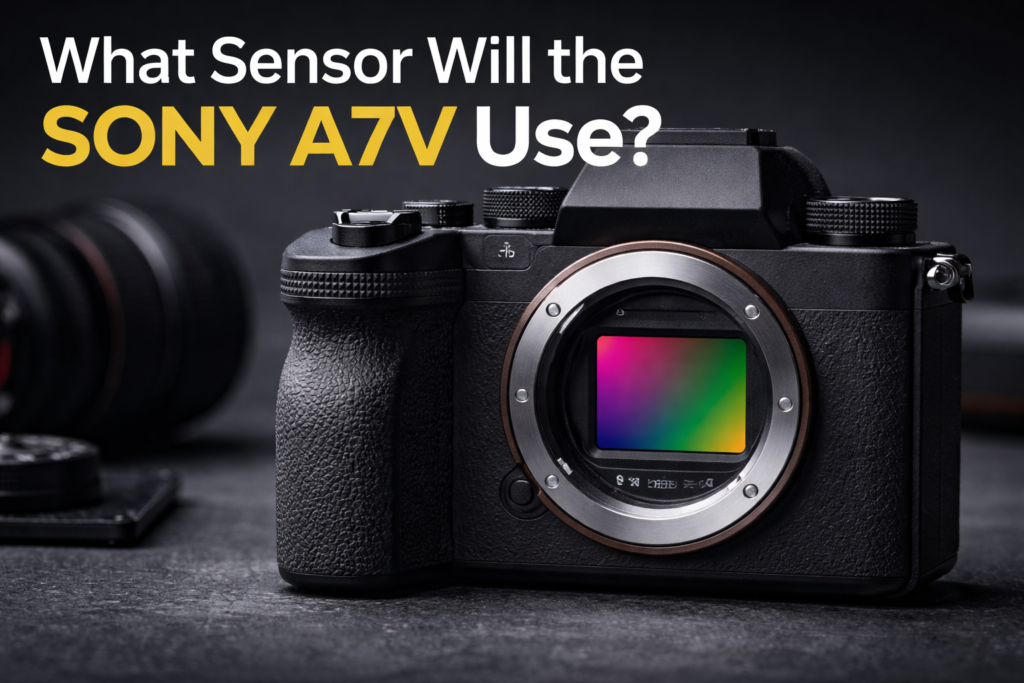
What Sensor Will the Sony A7V Use?

The Sony A7 series has long been a benchmark in the mirrorless camera world. With each generation, Sony has managed to refine image quality, improve speed, and introduce smarter technology without losing its core identity. As rumors and expectations grow around the Sony A7V, one question dominates discussions among photographers and videographers alike: what sensor will the Sony A7V use?
While Sony has not officially revealed the full specifications yet, strong industry patterns, credible leaks, and Sony’s historical upgrade strategy offer enough clues to paint a realistic picture.
Understanding the Legacy of the Sony A7 Series
Before predicting the future, it’s important to understand where the A7 line currently stands. Sony designed the A7 series as a balanced full-frame system—one that appeals to landscape photographers, portrait artists, travel shooters, and hybrid creators.
Each generation has focused on incremental but meaningful improvements rather than radical changes. This approach allows Sony to maintain reliability while gradually introducing advanced sensor technology.
A Quick Look at Previous Sensors
· Sony A7: 24.3MP full-frame CMOS sensor
· Sony A7 II: Similar resolution with better stabilization
· Sony A7 III: 24.2MP BSI CMOS sensor
· Sony A7 IV: 33MP back-illuminated Exmor R sensor
This steady evolution strongly hints at how Sony may approach the A7V sensor upgrade.
Expected Sensor Type in the Sony A7V
A Refined Full-Frame BSI CMOS Sensor
The Sony A7V is widely expected to feature a full-frame back-illuminated CMOS sensor, continuing Sony’s reliance on its Exmor R technology. Back-illuminated sensors improve light gathering efficiency, which directly benefits low-light shooting and dynamic range.
Sony has invested heavily in refining BSI architecture, making it extremely unlikely that the company would step backward or radically change sensor fundamentals for this model.
Will the Sony A7V Increase Resolution?
The Most Likely Megapixel Range
One of the biggest debates revolves around resolution. The A7 IV already moved from 24MP to 33MP, a significant jump that pleased photographers who wanted more detail without sacrificing file manageability.
For the A7V, Sony has two realistic options:
· Maintain the 33MP range with better processing
· Slightly increase resolution to around 36MP
A dramatic jump beyond this would push the camera too close to the A7R series, which Sony carefully positions for high-resolution professionals. Therefore, a moderate refinement is far more probable than a radical leap.
Stacked Sensor: Possible or Unlikely?
Stacked sensors offer faster readout speeds, reduced rolling shutter, and improved video performance. Sony already uses stacked designs in flagship models like the A1 and A9 series.
However, placing a stacked sensor inside the A7V could disrupt Sony’s product hierarchy. The A7 line is meant to be versatile but not specialized at the extreme performance level.
Most Realistic Scenario
Instead of a fully stacked design, Sony may enhance sensor readout speed through improved circuitry and image processors, achieving better performance without crossing into flagship territory.
Improvements in Dynamic Range and Color Science
Sony sensors are already known for exceptional dynamic range, often exceeding 14 stops in real-world usage. With the A7V, improvements are expected to come from refinement rather than reinvention.
What Users Can Expect
· Better highlight recovery
· Cleaner shadow details
· More natural skin tones
· Improved color separation in complex lighting
Sony’s recent focus on color science—especially after feedback from photographers—suggests the A7V sensor will deliver more pleasing out-of-camera results.
Low-Light Performance Expectations
Low-light performance is one of the strongest selling points of Sony full-frame cameras. Thanks to BSI technology and advanced noise reduction, the A7V is expected to perform even better than its predecessor.
Practical Benefits
· Cleaner images at high ISO
· Reduced color noise in shadows
· Improved night photography
· Better indoor video quality
These enhancements would make the camera appealing to wedding photographers, event shooters, and content creators working in challenging lighting conditions.
Video Capabilities Linked to the Sensor
Sensor design plays a critical role in video performance. The Sony A7 IV already supports advanced video features, and the A7V is expected to build upon that foundation.
Sensor-Driven Video Enhancements
· Improved rolling shutter control
· More efficient heat management
· Better pixel readout for oversampled footage
· Cleaner low-light video
Rather than pushing extreme frame rates, Sony may focus on stability and reliability, ensuring the sensor can handle long recording sessions without overheating.
Autofocus Performance and Sensor Integration
Modern autofocus systems rely heavily on sensor design. The Sony A7V is expected to feature an improved phase-detection autofocus array embedded directly into the sensor.
Likely Autofocus Improvements
· Higher number of focus points
· Better subject recognition
· Faster eye and face detection
· Improved tracking accuracy
Sony’s AI-driven autofocus has already set industry standards, and the A7V sensor will likely enhance these capabilities even further.
Manufacturing Advantage: Sony as a Sensor Leader
One important factor that often gets overlooked is that Sony is not just a camera brand—it is also one of the world’s leading sensor manufacturers. Many competing brands rely on Sony sensors.
This gives Sony a unique advantage:
· Early access to new sensor technologies
· Custom designs optimized for specific camera lines
· Better integration with image processors
As a result, the A7V sensor will almost certainly be designed specifically for balanced performance rather than reused from another model.
How the A7V Sensor Fits Into Sony’s Lineup
Sony carefully positions each camera series to avoid internal competition:
· A7: Balanced all-rounder
· A7R: High resolution
· A7S: Low-light and video
· A9/A1: Speed and professional performance
The A7V sensor will likely sit comfortably in the middle, offering versatility without overshadowing specialized models.

Who Will Benefit Most From the A7V Sensor?
The expected sensor upgrades make the Sony A7V suitable for a wide range of users:
· Travel photographers seeking detail and portability
· Portrait photographers valuing skin tone accuracy
· Hybrid creators balancing photos and video
· Enthusiasts upgrading from older full-frame models
This balanced approach has always been the A7 series’ greatest strength.
Final Thoughts:
While official confirmation is still pending, all signs point toward a refined full-frame BSI CMOS sensor with improved dynamic range, better low-light performance, and smarter autofocus integration. Rather than chasing extreme specifications, Sony appears focused on delivering a sensor that excels in real-world use.
As Sony continues its tradition of sensor innovation, the A7V is shaping up to be a compelling choice for anyone seeking a future-proof full-frame camera that performs exceptionally across multiple disciplines.