

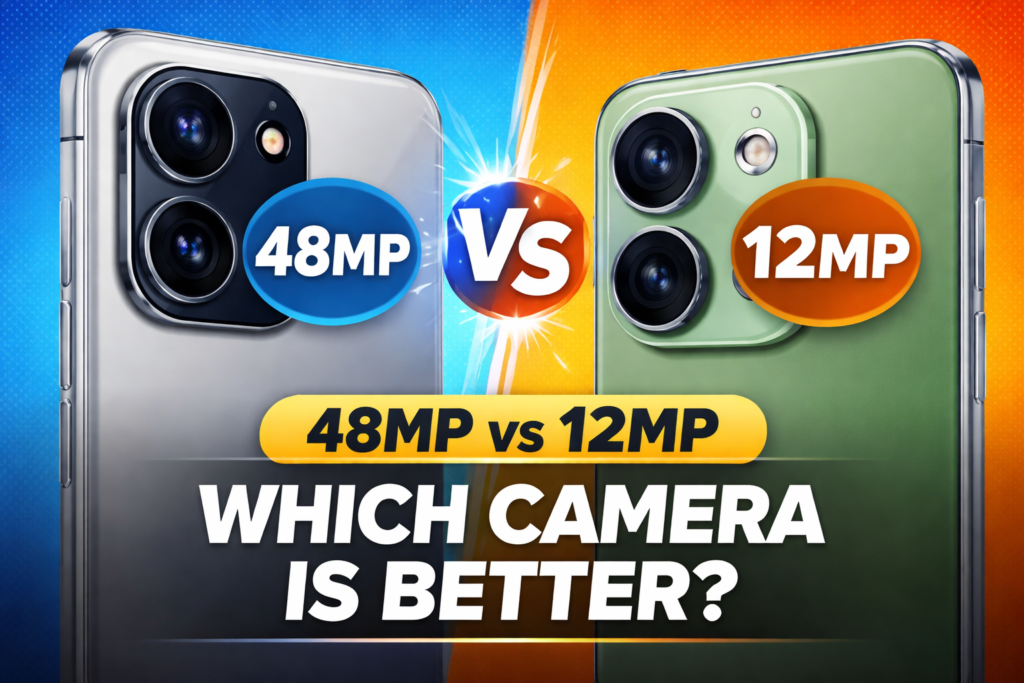

In today’s smartphone market, camera quality has become one of the biggest deciding factors for buyers. Brands aggressively advertise higher megapixel numbers, making many users believe that a 48MP camera is automatically better than a 12MP camera. But is that really true?
In breaking myths and explaining technology in a simple and honest way. How megapixels actually work, compare 48MP and 12MP cameras in real-world usage, and help you understand which one is better for your needs, not just on paper.
The Biggest Myth: More Megapixels = Better Camera
One of the most common misconceptions is that higher megapixels always produce better photos. In reality, image quality depends on several factors such as:
A well-optimized 12MP camera can easily outperform a poorly tuned 48MP sensor.
Understanding Sensor Size and Pixel Size
Why Sensor Size Matters
The sensor is the heart of any camera. A larger sensor can capture more light, resulting in:
- Better low-light performance
- More accurate colors
- Less noise
If a 48MP camera uses a small sensor, each pixel becomes tiny and struggles to capture light efficiently.
Pixel Size Explained
- 12MP cameras usually have larger individual pixels
- 48MP cameras often have smaller pixels
Larger pixels are better at collecting light, which is crucial for night photography and indoor shots.
How 48MP Cameras Actually Work (Pixel Binning)?
Most modern 48MP smartphone cameras do not shoot full 48MP images by default. Instead, they use a technology called pixel binning.
What Is Pixel Binning?
Pixel binning combines multiple small pixels into one larger pixel. Typically:
- A 48MP camera combines 4 pixels into 1
- The final output image becomes 12MP
This improves:
- Brightness
- Noise control
- Dynamic range
So, ironically, many 48MP cameras mostly behave like 12MP cameras in daily use.
What Does Megapixel Actually Mean?
A megapixel (MP) refers to one million pixels. Pixels are tiny dots that together form an image.
A 12MP camera captures around 12 million pixels A 48MP camera captures around 48 million pixels
More pixels mean more image data, which can result in higher resolution photos. However, megapixels alone do not define camera quality. This is where most people get confused.
Image Quality Comparison: 48MP vs 12MP
Daylight Photography
In good lighting:
- 48MP cameras can capture more detail
- Cropping images is easier without losing sharpness
However, this advantage is noticeable mainly when shooting in full 48MP mode, which is rarely used by casual users.
Low-Light Photography
In low light:
- 12MP cameras often perform better
- Less noise and cleaner images
- Faster image processing
This is why many flagship phones still rely on optimized 12MP sensors.
File Size and Storage Impact
Higher megapixel images mean larger file sizes.
If you take a lot of photos:
- Storage fills up faster
- Cloud backups consume more data
- Sharing images takes longer
For everyday users, this can become inconvenient.
Camera Performance and Processing Speed
Processing Time 48MP images require more processing power. This can lead to:
- Slower shutter response
- Longer saving times
- Increased battery consumption
A 12MP camera usually offers:
- Faster capture
- Smoother performance
- Better consistency
This matters especially for casual photography and social media usage.
Video Recording: Does Megapixel Matter?
Megapixels are less important for video.
Most smartphones, whether 12MP or 48MP, record:
- 4K video using around 8MP per frame
What matters more for video:
- Stabilization
- Autofocus
- Sensor readout speed
Many 12MP cameras deliver excellent video quality because they are optimized for it.
Professional Photography vs Everyday Use
When a 48MP Camera Makes Sense
A 48MP camera is useful if:
- You frequently crop photos
- You print large images
- You shoot landscapes with high detail
- You manually control camera settings
When a 12MP Camera Is the Better Choice
A 12MP camera is ideal if:
- You mostly shoot in auto mode
- You take photos in low light
- You want consistent results
- You use social media platforms
For most users, 12MP is more than enough.
Smartphone Examples: Real-World Insight
Many premium smartphones use 12MP cameras and still outperform higher megapixel competitors due to superior optimization.
Why?
- Better sensors
- Advanced image processing
- Superior software algorithms
This proves that megapixel count is not the final verdict.
Battery Life Considerations
Capturing and processing high-resolution images requires more power.
- 48MP cameras can drain battery faster
- Continuous shooting heats the device more
A 12MP camera is generally:
- More battery-efficient
- Better for long photography sessions
Social Media and Megapixels
Platforms like Instagram, Facebook, and X compress images heavily.
This means:
- Differences between 12MP and 48MP become almost invisible
- High resolution offers no real advantage
For content creators focused on social media, camera optimization matters more than megapixel numbers.
Marketing vs Reality
Smartphone brands often use megapixels as a marketing tool because numbers are easy to sell.
However:
- Camera quality is a combination of hardware and software
- Bigger numbers do not guarantee better results
Which Camera Should You Choose?
Choose 48MP If:
- You love high-resolution photography
- You edit photos professionally
- You need flexibility for cropping
Choose 12MP If:
- You want reliable image quality
- You shoot often in low light
- You value simplicity and consistency
Final Verdict: 48MP vs 12MP
So, which camera is better?
👉 There is no universal winner.
- A 48MP camera offers flexibility and detail in ideal conditions
- A 12MP camera delivers balanced performance, better low-light results, and faster processing
For most users, a well-optimized 12MP camera is more than sufficient and often produces better real-world results than a higher megapixel sensor.

Conclusion
Megapixels are just one piece of the camera puzzle. Sensor quality, image processing, and real-world performance matter far more than numbers printed on a spec sheet.
Before choosing your next smartphone, ask yourself how you actually use the camera. The best camera is not the one with the highest megapixels, but the one that consistently delivers great photos for your needs.