

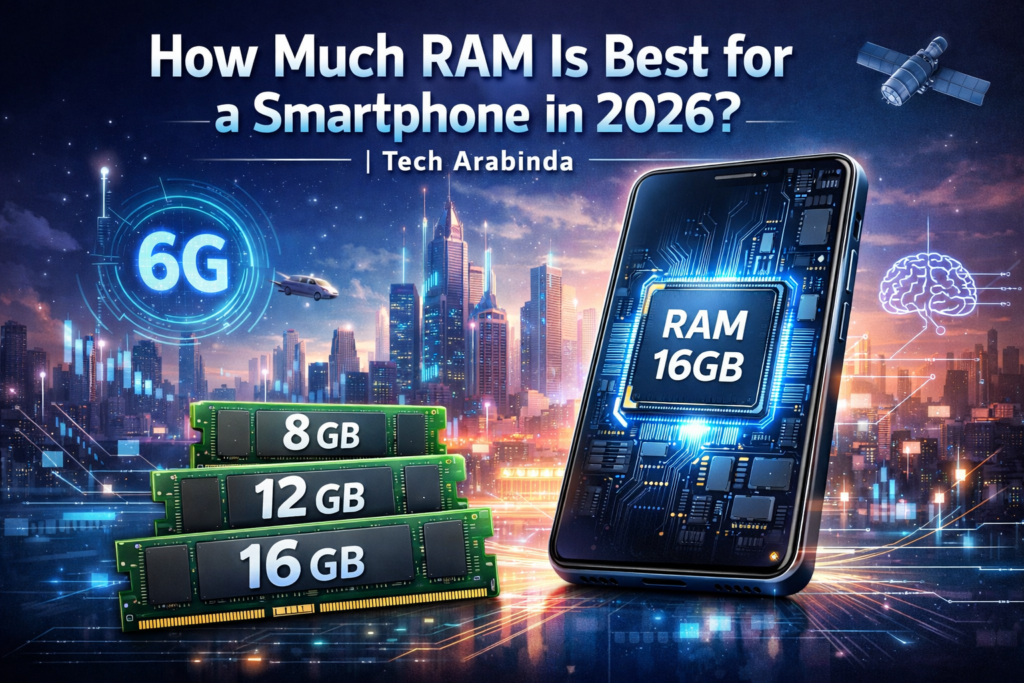

Choosing the right smartphone today is no longer just about camera quality or battery size. One of the most important factors influencing performance, speed, and overall user experience is RAM. But how much RAM is actually best for a phone? Is more always better, or is there a point where extra RAM becomes unnecessary?
You need to know about smartphone RAM, how it affects daily usage, and how to choose the perfect RAM size based on your needs—without wasting money.
What Is RAM in a Smartphone?
RAM (Random Access Memory) is a type of short-term memory that your phone uses to run apps, games, and background processes. Unlike internal storage, RAM is temporary. Once you close an app or restart your phone, the RAM is cleared.
In simple terms:
- More RAM allows your phone to handle more tasks at the same time.
- Less RAM means apps may reload frequently or slow down during multitasking.
RAM does not store your photos, videos, or files—it only helps your phone run smoothly while you are using it.
Why RAM Matters in Daily Smartphone Usage?
Many users think RAM only matters for gaming, but that’s not entirely true. RAM affects almost every part of your smartphone experience:
- Faster app switching
- Smoother scrolling
- Better background performance
- Reduced app reloads
- Stable gaming performance
- Improved camera processing speed
If your phone feels laggy or slow even after clearing storage, insufficient RAM could be the reason.
Common Myths About Phone RAM
Before deciding how much RAM is best, let’s clear up some common misconceptions:
1: More RAM Always Means Faster Phone
Not true. RAM works together with the processor and software optimization. A phone with 8GB RAM and a weak processor can perform worse than a well-optimized phone with 6GB RAM.
2: RAM Increases Storage Space
RAM and storage are completely different. RAM does not increase how many photos or apps you can store.
3: All RAM Works the Same
Different phones use different RAM types like LPDDR4X or LPDDR5, which significantly affect speed and power efficiency.
How Much RAM Do You Actually Need?
The “best” RAM size depends entirely on how you use your phone. Let’s break it down by usage type.
4GB RAM – Is It Still Worth Buying?
In 2026, 4GB RAM is considered entry-level and suitable only for basic users.
Best for:
- Calling and messaging
- Light social media usage
- Browsing the internet
- Online payments
- Minimal multitasking
Limitations:
- Frequent app reloads
- Slower performance over time
- Not ideal for heavy apps or gaming
👉 Verdict: Only recommended if you are on a tight budget or buying a phone for elderly users.
6GB RAM – Balanced and Practical Choice 6GB RAM is the minimum recommended amount for a smooth smartphone experience today.
Best for:
- Social media apps
- YouTube and streaming
- Casual gaming
- Photography
- Daily multitasking
Advantages:
- Good balance of performance and price
- Suitable for most users
- Handles modern apps smoothly
👉 Verdict: Ideal for average users who want stable performance without overspending.
8GB RAM – The Sweet Spot for Most Users 8GB RAM has become the most popular choice and offers excellent performance for almost everyone.
Best for:
- Heavy multitasking
- High-end gaming
- Video editing apps
- Professional usage
- Long-term reliability
Why it works well:
- Apps stay open longer in the background
- Smooth gaming with fewer frame drops
- Better future-proofing
👉 Verdict: If you want a phone that stays fast for years, 8GB RAM is one of the best choices.
12GB RAM – Power Users and Gamers 12GB RAM is designed for users who push their phones to the limit.
Best for:
- Hardcore mobile gaming
- Streaming + gaming simultaneously
- Advanced editing apps
- Desktop-mode usage
- Heavy background processes
Things to consider:
- Not always fully utilized by average users
- Higher cost
- Requires a powerful processor to show benefits
👉 Verdict: Great for power users, but unnecessary for most people.
16GB RAM and Above – Is It Overkill?
Some flagship phones now offer 16GB RAM or even 24GB RAM, mainly for marketing and extreme performance scenarios.
Best for:
- Developers and testers
- Console-level mobile gaming
- Running emulators
- Advanced multitasking workflows
Reality check:
- Most apps cannot fully utilize this much RAM
- Software optimization matters more
- Battery consumption may increase
👉 Verdict: Not required for normal users; mostly for enthusiasts.
How Software Optimization Affects RAM Usage?
RAM alone doesn’t determine performance. The operating system plays a major role.
Android:
- Heavier than iOS
- Requires more RAM
- Custom UI layers can increase RAM usage
iOS:
- Highly optimized
- Uses RAM more efficiently
- iPhones often perform well with less RAM
That’s why an iPhone with 6GB RAM can compete with Android phones having 8GB or more.
RAM Type Matters Too
Modern smartphones use advanced RAM technologies:
- LPDDR4X – Common in mid-range phones
- LPDDR5 – Faster and more power-efficient
- LPDDR5X – Used in flagship devices
Faster RAM improves app loading times and gaming performance while consuming less battery.
Virtual RAM: Does It Really Help?
Many brands now advertise “Virtual RAM” or “RAM Expansion” using internal storage.
How it works:
- Uses a portion of storage as temporary memory
- Helps in background app management
Limitations:
- Slower than physical RAM
- Cannot replace real RAM
- Useful only in limited scenarios
👉 Verdict: Virtual RAM is helpful, but it should not be your main deciding factor.
RAM vs Processor: What’s More Important?
RAM and processor work together. Even high RAM cannot fix a slow processor.
Example:
- 8GB RAM + weak chipset = average performance
- 6GB RAM + powerful chipset = better performance
Always balance RAM with a capable processor.
RAM and Gaming Performance
For mobile gaming, RAM affects:
- Texture loading
- Frame stability
- Background app handling
Recommended RAM for gaming:
- Casual games: 6GB
- Competitive games: 8GB
- High-end games: 12GB
Also consider GPU performance and thermal management.
RAM and Battery Life
More RAM does not always mean worse battery life. Modern RAM is energy-efficient, but excessive background apps can increase battery drain.
Well-optimized software + efficient RAM type = better battery performance.
How Much RAM Is Best for Long-Term Use?
If you plan to use your phone for 3–4 years:
- Minimum: 6GB
- Ideal: 8GB
- Power users: 12GB
Apps are becoming heavier every year, so future-proofing matters.
Before choosing RAM size, ask yourself:
- Do I multitask a lot?
- Do I play heavy games?
- How long will I use this phone?
- Is the processor powerful enough?
Avoid paying extra for RAM you will never use.

Final Verdict:
There is no one-size-fits-all answer, but here’s a simple conclusion:
- 4GB – Basic use only
- 6GB – Good for most users
- 8GB – Best overall choice
- 12GB – Power users and gamers
- 16GB+ – Enthusiasts only
For the majority of users in 2026, 8GB RAM offers the best balance of performance, longevity, and value.